
The Compounding Cost of Broken Experiences

In healthcare, CX guesswork isn’t just expensive… it’s dangerous. As journeys span systems, teams, and channels, not seeing cause and effect becomes the real risk.
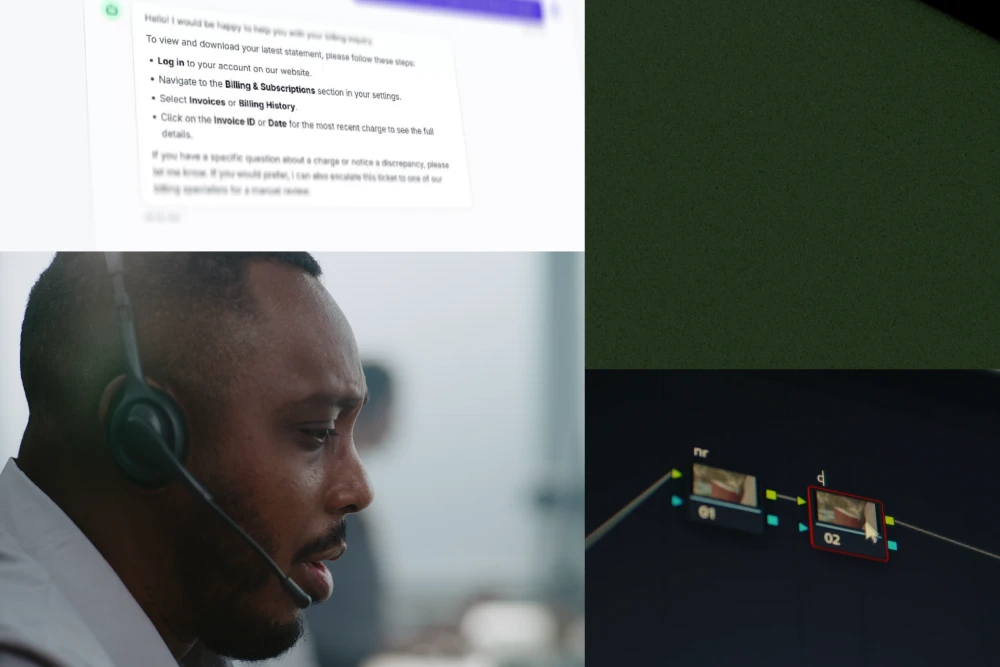
Two years ago, my dad, almost 80, called me after spending over an hour trying to figure out whether a healthcare bill was new or already paid.
What followed was painfully familiar: bounced between billing and member services, put on hold, forced to repeat himself. He gave up, not because the problem was complex, but because the process was.
What struck me wasn’t just his frustration. It was how stuck the member service agents were. They tried to help but were trapped in disconnected systems, searching for answers that didn’t exist.
No one, not the people, not their tools, could tell him the truth. Imagine if he’d been sick?
That moment stuck with me because it mirrors what CX and operations leaders face every day: fragmented tools, broken journeys, and no clear view into where friction is building or why.
All while customer expectations keep rising.
The Pressures Are Clear. The Answers Aren’t.
Ask any CX leader and you’ll hear the same thing: expectations are high, budgets tight, teams stretched – and outcomes still need to improve.
So what happens? More automation. More tools. More dashboards.
But when metrics don’t move – or they move the wrong way – the questions start. Is it staffing? Automation? Did we cut too deeply or not enough? No one knows for sure.
This isn’t a leadership problem. It’s not about agent effort or empathy. It’s the disconnected systems.
Most CX environments weren’t built for cross-channel complexity. Most CX tech stacks leave leaders guessing.
In an increasingly hybrid world, where AI and people share the work, that guesswork is costly.
And in healthcare, guesswork isn’t just costly. It’s dangerous.
Healthcare Is Where CX Fails First… But It’s Not the Only Place
I’ve spent two decades launching health plans and scaling healthcare technology companies. If healthcare teaches you anything, it’s this: every flaw in a system shows up here first and with higher stakes.
Healthcare journeys are emotional, regulated, long. They cross clinical and administrative teams. When friction hits, everyone feels it.
But healthcare isn’t unique to these problems. The same cracks exist in every industry. Healthcare just reveals them faster.
And here’s the hard truth: more empathy won’t fix it. Neither will more headcount or another isolated tool.
Without visibility across the full journey, leaders treat symptoms instead of solving root causes.
Disconnected systems and siloed data don’t just slow teams down. They leave even the best people flying blind.
What CX Leaders Have Been Missing
Dashboards and reports won’t fix this. CX leaders don’t need more data. They need more clarity.
Clarity that connects the dots – and reveals:
- Where journeys are breaking
- Why friction is building
- What actions will move the needle and whether that action is working
That kind of clarity doesn’t come from traditional tools or narrow strategies.
It requires a new capability: operational intelligence.
Operational intelligence gives leaders a connected view of how their operation is performing, not in fragments, but as a whole. It replaces hindsight with intelligence grounded in the unique DNA of your business and shows what’s happening now and what needs attention next.
Operational intelligence does three things well:
- Surfaces friction early, before customers feel it
- Explains root causes (not just symptoms)
- Guides action in a way that drives real behavior change
This isn’t just optimization. It’s a new way to run the business. One that replaces guesswork with precision and enables faster, more confident decisions.
Why We Built Scala
We built Scala to fix what we’ve experienced firsthand.
Journeys were breaking, but leaders didn’t know why. The data existed but lived in silos. Tools didn’t talk to each other. By the time problems showed up in metrics, the damage was already done.
Scala changes that.
Our AI platform sits on top of your existing CX systems. No rip and replace. It unifies tools, channels, and workflows into a single operational view. Leaders can finally see how the experience is performing end to end.
Scala pinpoints true sources of friction and enables action before problems spread across agents, AI, or systems. Insight turns into execution.
That’s how teams move faster, lower costs, and improve experience without flying blind.
We learned these lessons from decades of experience working in healthcare. But Scala works anywhere clarity is hard to achieve, where journeys are messy, and the cost of getting it wrong is high.
A More Intelligent Path Forward
CX isn’t just about service anymore. CX is also about protecting growth, earning trust, and leading with clarity.
But you can’t lead what you can’t see – clearly.
That moment with my dad wasn’t about bad service…it was about good people doing their best inside broken systems.
Today, many leaders face the same challenge: fragmented tools, rising expectations, and too little insight.
The next era of CX belongs to those who turn intelligence into action and action into better outcomes.
That’s what Scala is built for.
Source: Leader POV interview with Greg Smith, Head of Global Growth & GTM